
Mount Auburn Cemetary Part 2
GroundscapesExpress, Inc. was hired with improving the deteriorating pathways throughout the unpaved areas of the cemetery’s landscape. Their unique evidenced – based approach, allowed more to be accomplished within the budgeted amount that was specifically allocated to repairing the walkway and paths. The experiences of the owner, designer and practitioner of Groundscapes Express Inc.,
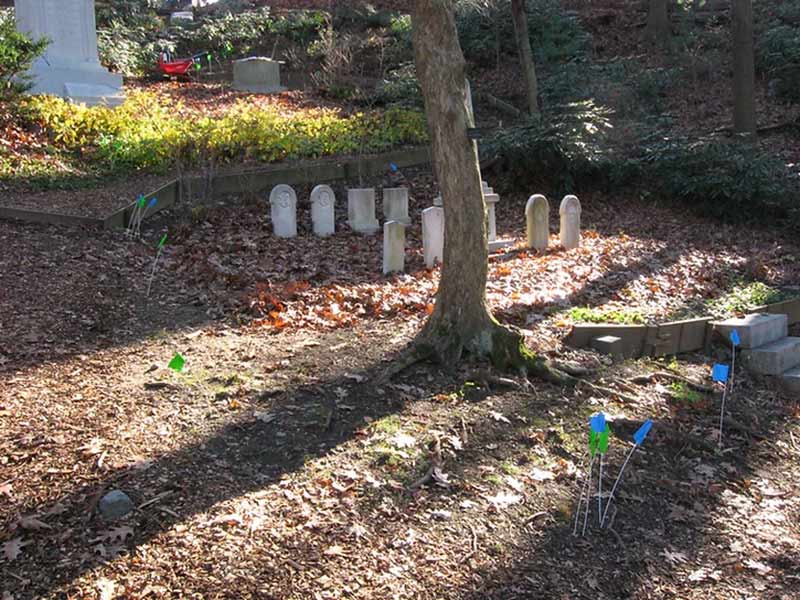
John Engwer perceived that any repair of these walkways were doomed to be repeated regardless of the materials and methods that were traditionally specified for these types of projects. He recognized that the landscaped environment must initially be modified to accommodate the construction of new pathways. The sloping soils were eroding and would continue that way unless they were modified in such a way as to accommodate the integration of the walkway.
John, as an ecological designer sought that the pathway be constructed of natural materials that were embodied with a low ecological footprint, with the first principle of utilizing existing materials before purchasing outside inputs with a high – embodied energy footprint. The existing walkway that was initially thought could be replaced was made from re-used railroad track ties. This material was manufactured by using soft – wood timbers that were sawn and milled to an unfinished and irregular shape. They were then bathed in creosote oil and put under pressure so as to impregnate the wood with a petroleum – based preservative
The embodied energy that was needed to extract, mill, process and transport these materials was excessive and the materials had to be replaced over time. This just seemed irresponsible to John and he sought a more Earth friendly and sustainable solution. The creosote oil treated timber ties were replaced by Filtermitts™℗ to border the walkways and to separate the paths. Filtermitts™℗ are made from natural hessian fiber tubes filled with composted vegetative waste products.
Stay tuned to see what filled these Filtermitts™℗ and help create a beautiful landscape!